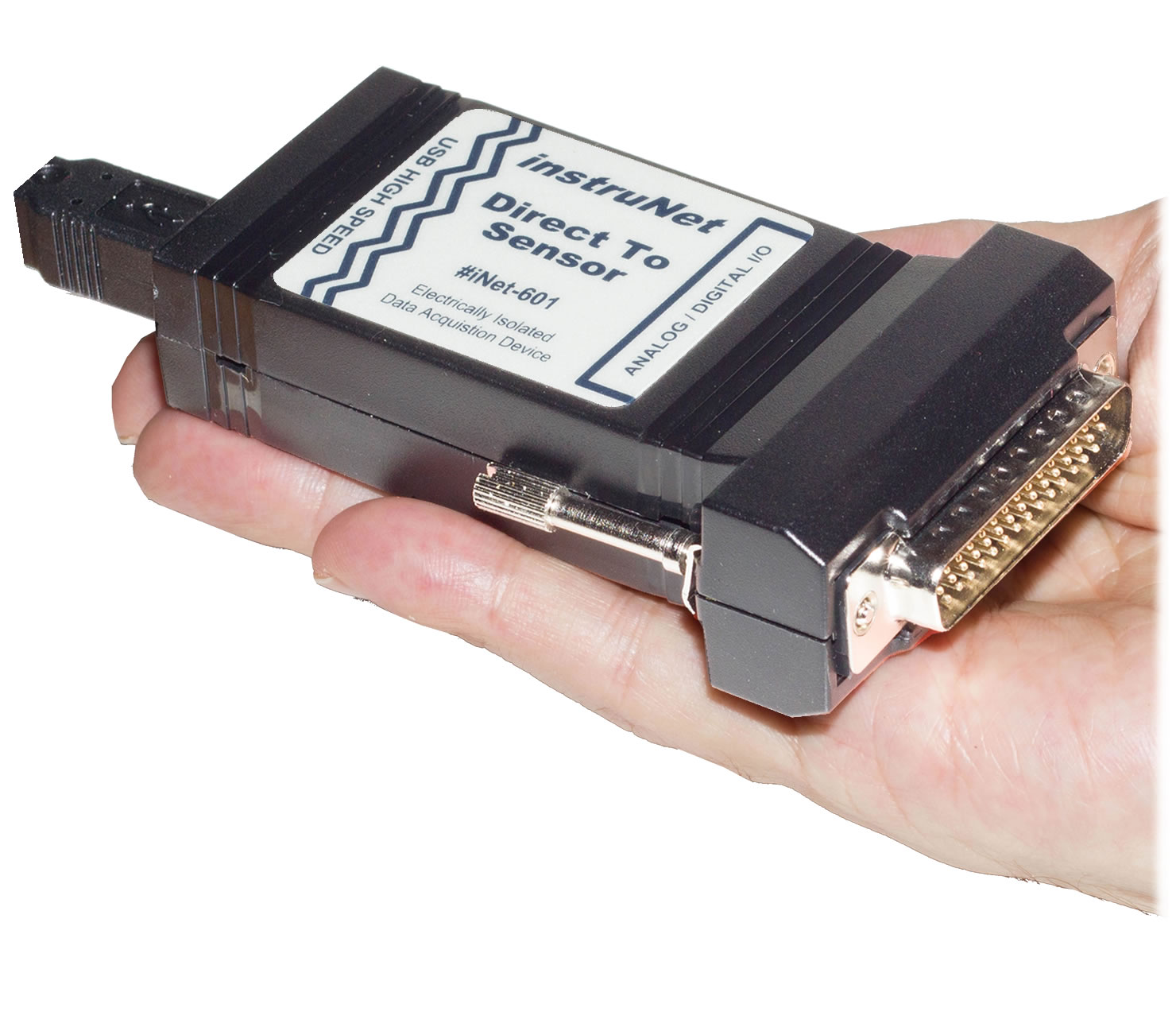
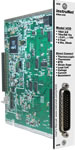
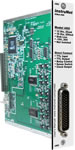
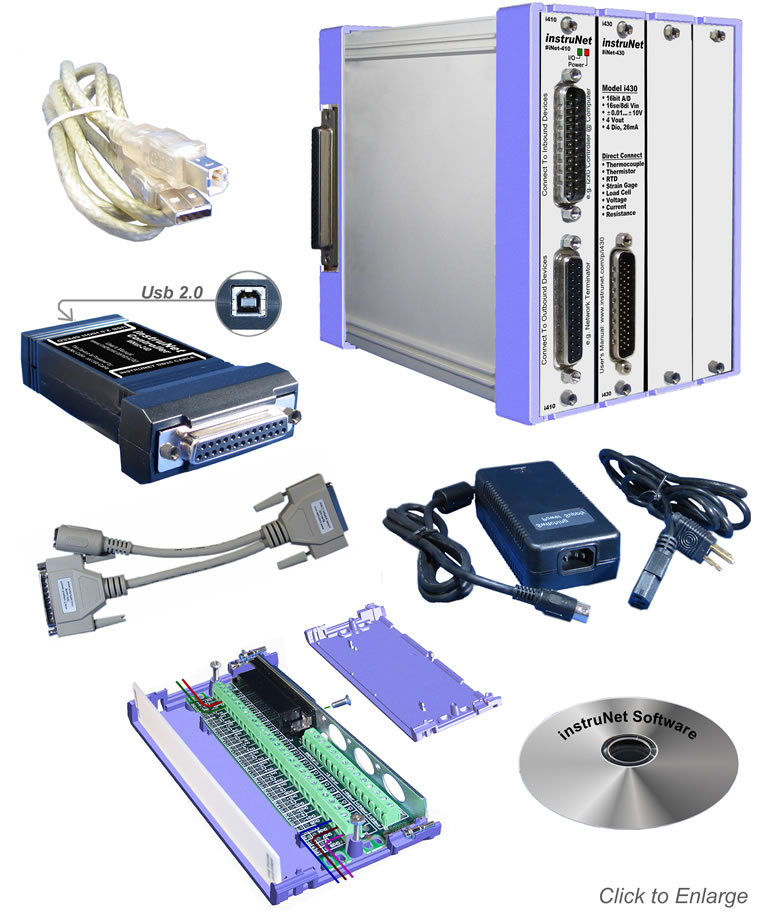
Small 15 x 11 x 14 cm Card Cage or i100 Box
controlled by 32bit processor inside of i2x0 Controller, which attaches to Windows computer (e.g. via USB bus)
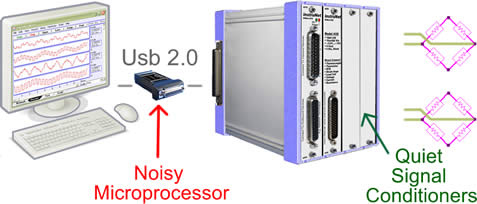
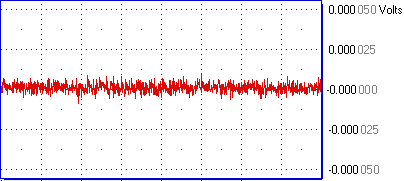
Reduce noise by placing boxes near sensors and 0-1000 feet from noisy computer
Digitize any combination of channels at 166,000 samples-per-second aggregate. For details click here
Each channel has independently programmable analog filters, integration time, voltage range, and sample rate
Programmable digital filters on All channels (LP, HP, BP, BS)
Solid Aluminum Construction
Hardware at half the price of National Instruments !
Low Cost Card Cage -- 50% less than ni !
instruNet is a low cost card cage that attaches to Windows computers via USB 2.0.
The advantage of a card cage is one can mix and match modules as needed, to build exactly what they need.
The advantage of the instruNet card cage is cost.
For example, instruNet 4/8/12/16 slot chassis sell for $75 per slot; whereas comparable NI chassis are 2x to 4x more costly.
Analog Backplane Reduces Cost -- 50% less than ni !
The instruNet card cage typically has one a/d measurement module and
additional modules provide signal conditioning. The conditioned analog signal is routed to the a/d module via the backplane.
This is dramatically different from NI's comparable systems (i.e. CompactDAQ, CompactRIO and Compact FieldPoint), which place
a/d measurement electronics on each module.
The advantage of the instruNet topology is cost. After the 1st module is installed, additional instruNet channels are conditioned at approximately $30 per channel; whereas NI's cost-per-channel is typically 2x to 8x more.
Universal Inputs Reduces Cost -- 50% less than ni !
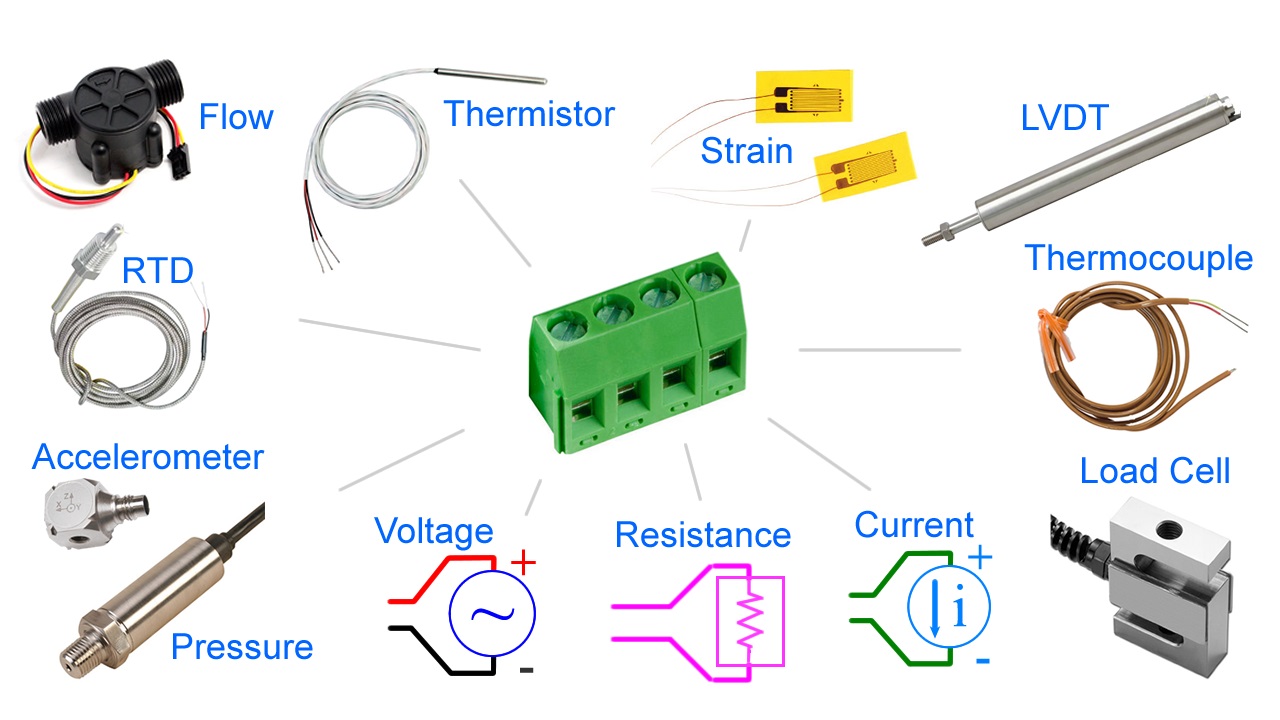
instruNet measurement modules have universal inputs that enable one to directly connect each channel to one of:
Thermocouple,
Thermistor,
Strain Gage,
Load Cell,
Counter/Timer,
RTD,
Voltage,
Current,
Resistance and
Accelerometer.
Absolute accuracy for all of these sensor types is specified.
In some cases, the end user adds an external shunt resistor.
The advantage of universal inputs is cost. For example if one wants to measure from two thermocouples,
two strain gages, and two +-10V signals; then one i430 module for $390 will suffice;
whereas the ni solution would involve several modules that cost over $1000.
In summary, instruNet provides hardware at half the cost, or more, of NI.
The table below shows which sensors directly connect to each hardware product.
The numbers in the table refer to number of channels; and if you click on those numbers, you will be redirected to the
measurement accuracy for that sensor and product.
The following sensors require an external shunt resistor:
rtd, thermistor, resistance measurement, current measurement, ¼ bridge strain gage, and ½ bridge strain gage.
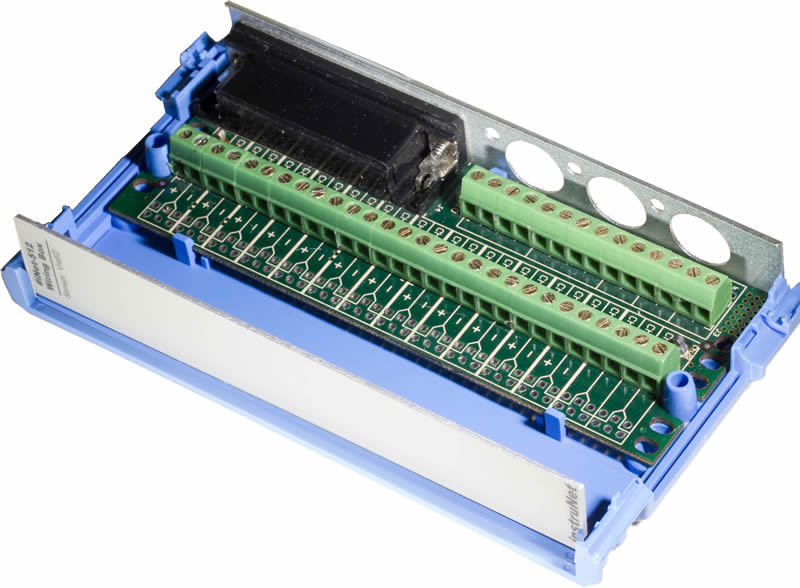
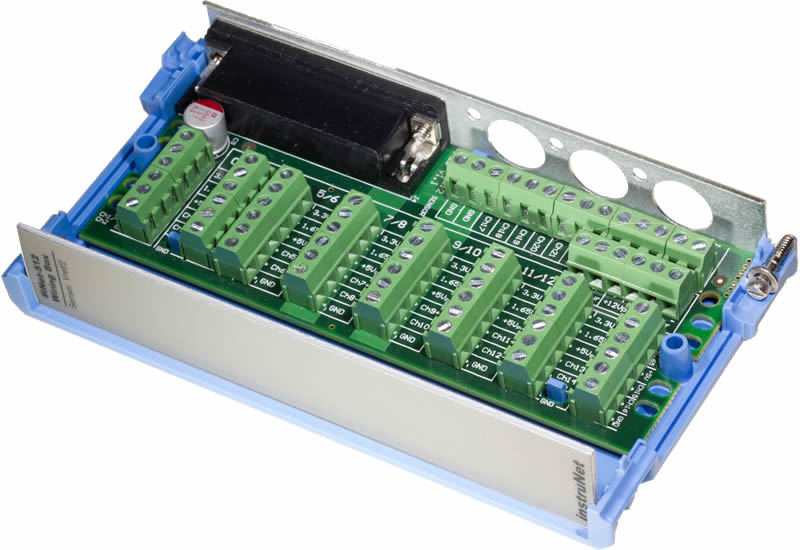
Thermocouple sensors require an i51x Wiring Box
attached to the i4xx card 28.
instruNet i4xx cards are installed by the end user into an
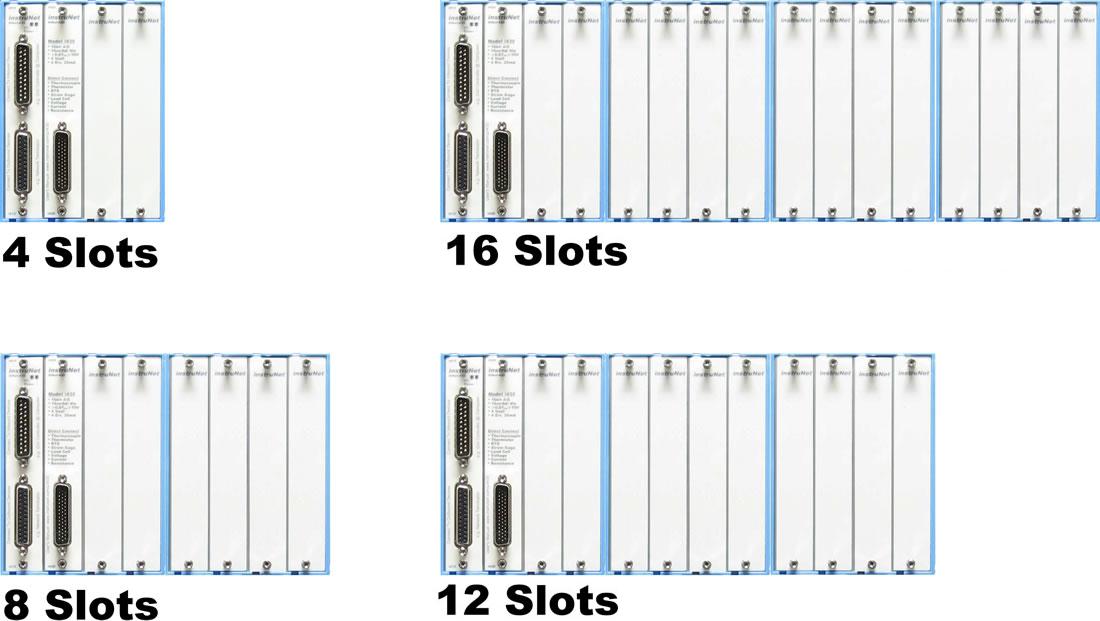
instruNet card cage that is 4, 8, 12 or 16 slots wide.
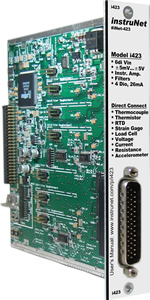
Each card is 13 x 2.5 x 13 cm in size (5" x 1" x 5", d/w/h). Below is a list of available cards. For more details on each, click on the model number in the below table.
The i410 connects Card Cage to Windows Computer via i2x0instruNet Controller.
Maximum Sample Rates
The following table shows maximum aggregate sample rates for
an i240 USB controller attached to an i4xx Card Cage.
To calculate the sample rate for each
channel, divide by the number of channels attached to the i240 controller. For example,
if the maximum aggregate sample rate is 166Ksamples/sec/controller, and you digitize 4 channels,
then you could digitize each channel at 41Ks/sec/channel.
For more details on this table, click here.
One can attach up to four i240 controllers to a computer to increase total system throughput. For example,
four i240 controllers (where each is attached to a separate i4xx Card Cage or i100 box) can
digitize 16 total channels at 41Ks/sec/channel; or 32 channels at 20.5K each.
The last column of the below table refers to low level signals (≤ ±80mV range). These are common when working with sensors such as a
strain gage, load cell or thermocouple. Notice that the only way to digitize
fast (e.g. ≥ 2K s/sec/controller) with a low level signal is to digitize directly into an i423 card
(to get ≤ 68K s/sec/controller).
Max Aggregate Sample Rate per Controller (K samples/second/controller)
The instruNet Card Cage provides the following key features:
The i4xx cards slide into an instruNet card cage that is 4, 8, 12 or 16 slots wide; as illustrated below.
The i400 product provides 4 slots,
and multiple i400's can be bolted together by the end user, side-by-side,
to create an 8, 12, or 16 slot system.
In many applications, one i400 with 4 slots is sufficient.
The i400 is 15 x 11 x 14 cm in size (6 x 4.5 x 5.6 inches, d/w/h)
The slots are numbered such that #1 is the left-most slot, #2 is to the right of #1, and so forth and so on.
Cards are held into position with
jackscrews that are tightened with a slotted screw driver.
Slot #1 is a special slot and is used to interface to a computer.
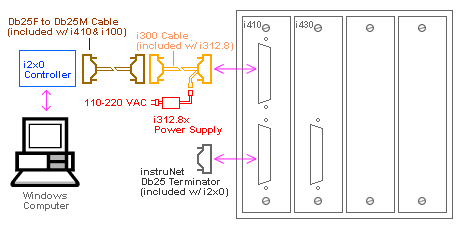
The i410 card slides into slot #1 and then cables to the computer via a Db25 cable that connects
to an i2x0 controller card. Also, an i300
Power Adaptor cable is used to route power from an i312.8 desktop
power supply to the i410 interface card in slot #1, which in turn routes that power to the card cage backplane
(i.e. pcb at back of card cage that attaches to all cards). This is illustrated in the below diagram.
27
The i4xx Card Cage needs at least one i43x a/d card (e.g. i430) if one wants to measure analog voltages. The i43x series cards
include an a/d converter and serve this purpose. The i42x series cards
(e.g. i420, i423) contain various signal conditioning
circuits and route signals along the backplane to the i43x for measurement. This happens automatically and
does not require programmer intervention, other than insertion of cards and attaching end user signals to the card's front panel connectors.
i2x0 instruNet DSP Card
Each instruNet Network is controlled by an instruNet
DSP
Controller card
that attaches to a Microsoft Windows computer.
The i240 attaches to a free USB 2.0 High Speed port (requires windows ≥ XP Sp2),
the i200 plugs into a free desktop computer PCI slot,
and the i230 plugs into a free laptop PCMCIA slot.
Each Controller is an independent computer in itself that utilizes a powerful 32-bit DSP processor and onboard RAM to control all aspects of data acquisition along its network. All real-time tasks are off-loaded to this processor, therefore the host computer is not burdened with real-time issues.
One can install between 1 and 4 Controllers, space permitting, since each controller operates independently.
For details on working with multiple i240 USB Controllers, click here.
instruNet Devices
Each instruNet network supports up to 8 instruNet Devices; where each device is a
either an i4xx Card Cage or an i100 box.
These devices are connected in a daisy-chain configuration to form a chain of Devices.
Each network can be up to 300 meters long.
All networks are anchored with an instruNet Terminator at the far end, and an instruNet i2x0 Controller at the near end.
This makes instruNet a cost effective method for designing large scale, high speed, multi-channel data acquisition systems.
Compatible Computers & Operating Systems
The following table summarizes computers compatible with instruNet.
32bit (not 64bit) Windows Xp/Vs/7 Computer with Type II PCMCIA compliant ≥ v2.1 (or ≥ PC-Card 95) PC-Card slot.
instruNet Version ≥ 3.0 (2010) requires Windows XP, Vista, or 7 (Xp/Vs/7) computer with at least 256MB of RAM Memory and at
least 256 MB of free disk space. The i240 USB controller requires 32bit or 64bit Windows XP Sp2 (service pack #2) or newer.
instruNet ≥ v3.0 does not run under linux, does not run on
Windows 95/98/Me/Nt/2K computers and does not run on Macintosh computers. For more details on what is compatible with
what, see instruNet Compatibility.
instruNet Software
instruNet includes software to interrogate, test, configure, and do I/O with all network channels.
This includes an application program called "instruNet World" and interfaces to Visual Basic, C, and C++.
instruNet software can configure all I/O channels, store your settings, view digitized data in real time,
stream data to disk, and scroll through your waveform post-acquisition.
instruNet software runs on Windows computers.
Free software and manual updates are available here.